A crew change looks simple on paper: one seafarer signs off, another signs on. In practice, it depends on a chain of details that all have to line up at once.
Multiply that across a fleet running rotations every few weeks, and even a small information gap can turn into a delayed sign-on, a compliance flag, or a vessel sailing short-handed.
For many crewing teams, that chain still runs through spreadsheets, email threads, and a handful of disconnected systems. It works, but keeping it running requires constant manual checking. The larger the fleet, the higher the cost of that manual effort.
The Hidden Work Behind Every Crew Change
Ask a crewing manager how much of their week goes to actually planning crew, versus chasing information to confirm a plan is still valid, and the answer is rarely in favour of planning.
A typical week might involve:
- Cross-checking a spreadsheet against a certificate expiry list kept somewhere else
- Emailing an agency to confirm a replacement's availability
- Manually re-entering the same crew details into a contract template
- Reconciling a vessel's crew list against budgeted headcount
None of these tasks are complex on their own. However, each step creates an opportunity for a missed detail, and in crewing, small oversights rarely stay small. A certificate that lapses mid-voyage, a contract generated with incorrect terms, or a vessel sailing without the required complement can lead to delays, unexpected costs, or compliance findings during a port state control inspection.
One Place for Crew Planning
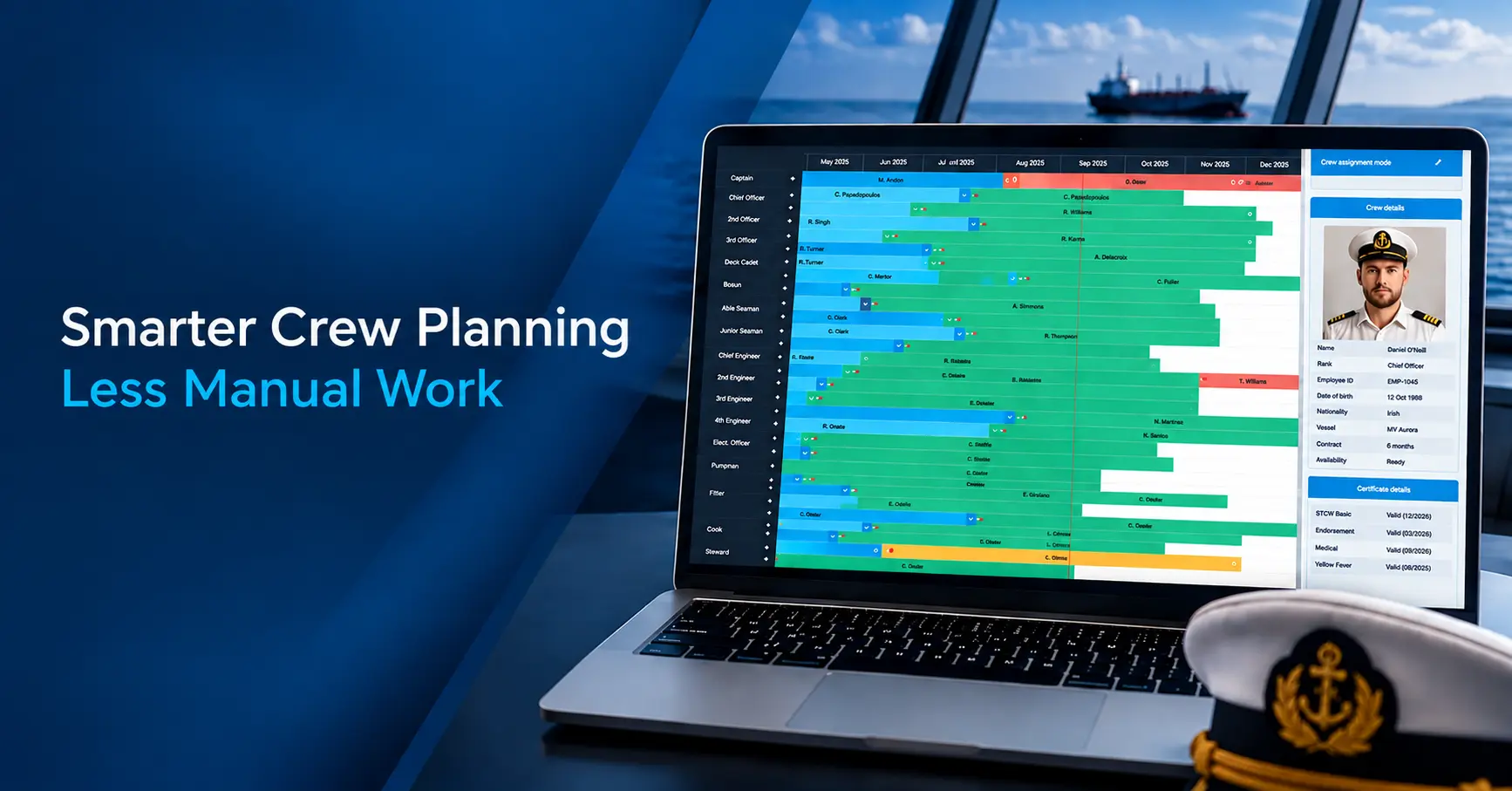
RadiantFleet Crewing brings crew and vessel information into a single system, allowing crewing teams to see who is available, what each vessel requires, and where upcoming crew changes need attention, all without switching between spreadsheets and inboxes to piece it together.
Graphical planning tools make crew scheduling easier to visualize across the entire fleet at once, rather than vessel by vessel. Because certificate, compliance, and budget data sit directly alongside the planning view, checks that used to happen manually, and often after the fact, now run automatically before a crew member is deployed.
Consider a common scenario: a crew member is available and qualified for an assignment today, but one of their certificates is set to expire while onboard. Caught early, this is a simple substitution or renewal. If caught late or missed entirely, it becomes a compliance gap discovered during an inspection while the vessel is already at sea. Connecting certificate data directly to the planning view turns a potential crisis into an early notification.
From Recruitment to Deployment
Crew management doesn't start when someone steps onboard. It begins with recruitment, and every stage between recruitment and deployment depends on the one before it. RadiantFleet connects that entire journey through a simple workflow:
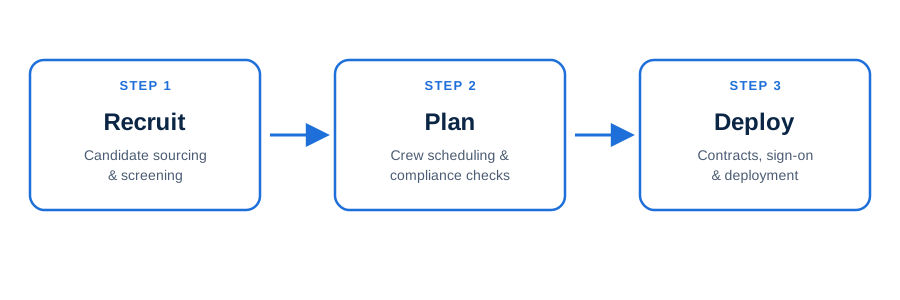
Information stays connected rather than being re-entered at each handoff. RadiantFleet can also generate IMO, POEA, River Cruise and custom contracts based on the relevant requirements, cutting down on the repetitive administrative work that comes with getting a crew member ready to sail.
Because Crewing works seamlessly alongside RadiantFleet Recruitment, Payroll, and Crew Portal, a single crew record supports the entire lifecycle rather than just the planning stage. Teams no longer need to maintain separate versions of the same information in multiple places.
Better Visibility, Less Administration
Moving away from spreadsheet-driven crewing isn't really about replacing Excel with another piece of software. It's about being able to answer the questions that matter, quickly and with confidence:
Who is available? Who is due to rotate? Are certificates valid through the length of the assignment? Are vessel requirements fully covered? Is this crew member actually ready for deployment?
When crew data, planning, and compliance live in a single unified platform, finding answers no longer requires manual searching. That is the difference between a crewing team that spends its time reacting to issues after they occur and one that resolves them before a vessel leaves port.